Not hard to guess which land-use is "tikanga" compliant.

The "Tribal" team believes that we know the preferred choice of all New Zealanders - of all people - of all ages!
Constructive, restorative, a future-focused, rural economy.
Prime Ministers letter re wilding pine damage in NZ.

Eric's Open Letter in response to the PM's letter

"Tikanga" a 1,000 year old alternative to "Organic"

Tikanga - Maori dictionary definition
"The customary system of values and practices that have developed over time and are deeply embedded in the social context".
In the modern context and its application to agribiz activity, it means farming through the deployment of traditional means of land use and its management. This means no modern day, chemical based agricultural sprays or fertilizers. Tikanga process agribiz will be conducted in areas where spray drift from non tikanga, adjoining agricultural properties does not impact the tikanga process agribiz whenua (land).
It means applying cultural values to a business
In Māoridom, a tribal Rangatira (chief) is required to demonstrate the skill, knowledge and personal qualities which would ensure the security and well-being of the people under his influence. These values have been described in various ways by different writers who generally conclude that there are twelve such values which appear to be accepted as fundamental to social organization by Māori throughout the motu (country).
These values are set out in the table illustrated herein.
Maori trade grew during the early colonial era
The cooperative business structure has been a natural part of the social structures and cultural relationships in the Māori world for centuries. The organization of economic activity in Māori society is based on consensual decision making, with Rangatira (chiefs) always subject to the agreement of the people. Monetary settlements made possible by recognition of the Treaty of Waitangi by legislation in 1975 to recompense Maori for commercial deprivation have allowed new Māori corporates to emerge. More and more of these new Māori corporations are beginning to practice the ancient trading practices of their Māori ancestors and combine forces to increase their chances of commercial success.
Research supported - 1,000-year cultural product narrative.
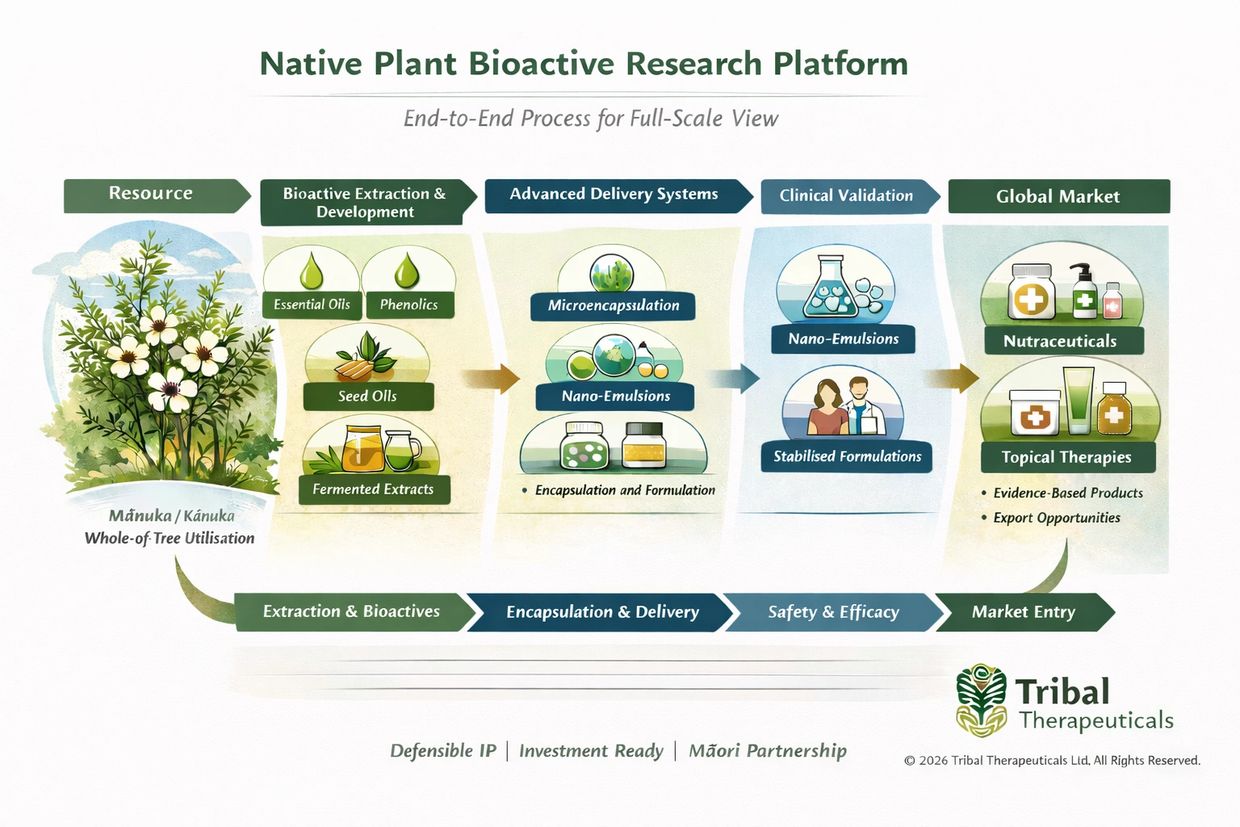
A Precinct dedicated to the 9M+ year old NZ tea tree
